3rd Quadrant, Sector 8023

If it hadn’t been for the blizzard this post would have been a few days earlier and would have predicted Steven Moffat leaving his position as showrunner of Doctor Who. For some weeks, he had been discussing when he’d know it was time to go. This changed to news of his “actively seeking” his replacement early this month. There was other data but – as this post can no longer prove prescience – it is hoped you’ll enjoy a slightly different Doctor Who-related story.

In mid-September of last year, while attending a new convention, I was asked to be a guest panelist for a Doctor Who discussion. I am leaving anonymous those who invited me to participate as a courtesy due to the nature of this story. They’ll be getting private messages about this post and can certainly chime in when they see this and if they so wish.

One of the questions posed in two parts to the audience for a show-of-hands response was: “How many like the new Doctor (Peter Capaldi)?”

The reaction was mixed and one who raised her hand to express a negative opinion was probably in her very early teens. The moderator asked her specifically why she was opposed to the 12th Doctor.

She informed us that she’d heard there was a policy that the Doctor was supposed to be getting younger. Apparently she believed Gallifreyans experience the equivalent of aging backwards – incrementally – with each regeneration. Given that Christopher Eccleston is 7 years older than David Tennant, who is 11 years older than Matt Smith, it seems she was expecting an incarnation portrayed by an actor in his (or her) early 20s or even younger.

This would certainly mean the Doctor’s and her own age would more or less match up with the 13th.

One of the lines Mr. Capaldi has delivered while playing the part was: “Clara, I’m not your boyfriend.” There’s no evidence that the girl in the audience wanted a younger actor in the role to facilitate a crush. More of her comments made it seem more likely she wanted to see the Doctor as a kind of playmate, though.

My heart went out to the girl in the audience then and still does to some extent. How does one correct a misapprehension about BBC policy, or showrunner intent, or Doctor Who canon without stepping on a dream? Isn’t one of the features of DW how easily it engages our imagination?

With Mr. Moffat’s departure the only installment of DW in 2016 will be the next Christmas special. The new companion series “Class” doesn’t start filming until Spring and won’t air until next year either. The target demographic for Class would seem to be much closer to the age of the girl at the panel. I hope she finds her peer in it.

I could say I hate waiting (because I do). I could say I’m happy to see Moffat’s tenure end (as I am). But I think this year-plus gap in Doctor Who affords all of us fresh territory in the imagination it invites – the Girl in the Audience included.

I’ve already been inspired; there’s a new art project inspired by these and other thoughts.
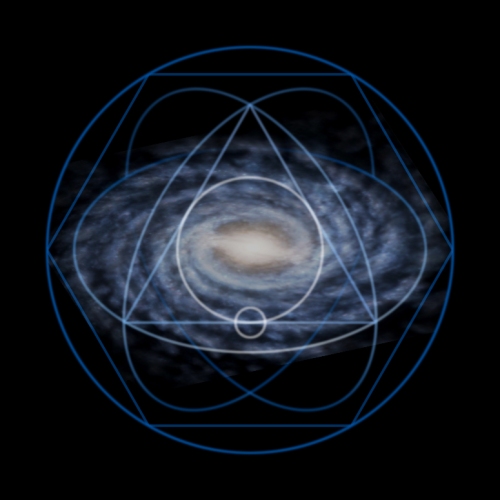
Gallifrey Page

Let’s see where this goes. Or, in other words, stay tuned.


δ³Σx²


“Your mission, should you choose to accept it…”

Hello,

Criminal Element has run my third post. Fans of Mission: Impossible, including the original series, should visit.

Note: This week’s regular blog entry may be delayed by preparations for the forecast storm. Your other mission – if within the region – is to stay safe and warm and well-provisioned. This post will not self-destruct.

Except it isn’t like that…


A month ago I wrote about a selection of Seven Wonders of Fictional Worlds and concluded with the fantasy of time travel to visit the traditional Wonders of classical antiquity. One of them, the Lighthouse of Alexandria, is seen in the background of this imagined hall of the Great Library in that same city.

Library

In 1980 Carl Sagan’s Cosmos: A Personal Voyage reinforced a story I’d learned in school. About 20% of both the first and last episodes of that documentary miniseries recount the importance and grandeur and then the tragic loss of the Great Library of Alexandria. The account makes it seem like a seven-century run that came to an end on one disastrous day. The last librarian, Hypatia, was murdered by a mob of zealots and the scrolls were burned.

Historians and scholars, along with both fans and authors of science fiction, hold onto the fantasy of time travel to before that terrible day. What books would you save if you had the chance? Dr. Sagan is not immune here:

“If I could travel back into time, this is the place I would visit. The Library of Alexandria, at its height, two thousand years ago.”

The story of the apparently sudden disaster portrays the mob as ignorant acting in defense of its ignorance. The loss to knowledge remains incalculable and is, probably rightfully, regarded as a one or two thousand-year setback to nearly all fields of study. Dr. Sagan provided a sense of perspective on this loss:

“We do know that of the 123 plays of Sophocles in the Library, only seven survived. One of those seven is Oedipus Rex. Similar numbers apply to the works of Aeschylus and Euripides. It is a little as if the only surviving works of a man named William Shakespeare were Coriolanus and A Winter’s Tale, but we had heard that he had written certain other plays, unknown to us but apparently prized in his time, works entitled Hamlet, Macbeth, Julius Caesar, King Lear, Romeo and Juliet.”

There are nine missing books of the poetry of Sappho and none of the works of Pythagoras survive. A full inventory of what was lost is also lost!

In the 2009 film, Agora, Hypatia is the hero and acts out our fantasy of salvage.

Hypatia

Hypatia was not merely the last librarian. In an age when women were still widely regarded as little more than property she was among the world’s leading mathematicians and astronomers. Further, she was a philosopher and teacher.

The mob that killed her and destroyed the Library is painted as acting out of fear but it seems more likely they were motivated by anger. In addition to the roles mentioned above, Hypatia was also not afraid to express political views. She is believed to have been a supported of Orestes, the governor of Alexandria; this made her an opponent of Cyril, that city’s bishop and successor to Theophilus.

But it didn’t happen quite that way.

As presented, the tale of the final moments of Hypatia and the Library is often a summary of at least four events and a compression of almost 400 years. The impression that there was just one very bad day at the Library is a false one. Julius Caesar did damage in 48 ʙᴄ and more may have happened toward the end of the reign of Aurelian (c. 275 ᴀᴅ).

There were at least two other libraries in Alexandria and – in summary – they may all have been conflated into one. One of these other libraries was part of the Serapeum Temple, which was ordered destroyed by the Bishop of Alexandria – Theophilus – in 391 ᴀᴅ.

This means Hypatia was more likely the victim of an assassination rather than a martyr of scholarship and/or science. The manner of death was particularly brutal to be sure but it cannot have been part of the attacks by Caesar or Aurelian; she wouldn’t have been born yet. She doesn’t seem to have come to prominence in Alexandria until nine years after the destruction of the Serapeum and its own library. The murder took place fifteen years later still.

“The books were distributed to the public baths of Alexandria, where they were used to feed the stoves which kept the baths so comfortably warm. Ibn al-Kifti writes that ‘the number of baths was well known, but I have forgotten it’ (we have Eutychius‘ word that there were in fact four thousand). ‘They say,’ continues Ibn al-Kifti, ‘that it took six months to burn all that mass of material.’”

Luciano Canfora, The Vanished Library (University of California Press; 1st edition (Aug. 29, 1990))

The Library of Alexandria is said to have held between Eutychius’ estimate and one million scrolls. Many of these were the result of the “books of the ships” policy. All ships entering the harbor of Alexandria were inspected. Any books found aboard were seized and a copy was made. The originals are said to have been kept for the library, the original owner of the books got the copies.

In addition to the time travel fantasy: What answers and inspirations would you save of you could? – we should also ask: Were the scrolls and books in the library during its destructions the last copies in existence? What’s easier – inventing time travel or holding out hope while in diligent search for missing copies?

Note: The title of this post is a quote from Nova: Season 8, Episode 12. “It’s About Time” (Dec. 30, 1980).

You are invited to rampantly speculate and muse in answer to these questions via comment on this post. Given that this blog is [Thankfully] visited by people from 78 nations and counting, the perspectives are sure to be fascinating.


📖

At the end of the tunnel…

I couldn’t be more pleased to alert you to Criminal Element publishing my second submission with them. And, in a week that took both David Bowie and Alan Rickman, I needed some happy news. Before visiting the post there you can probably guess the topic from the image below.

Essential

Note: There will be a regular post here later today. Please consider this a special announcement.


Astronomical proportion…

The work of other artists often fascinates me. I can appreciate a technique or admire a style but the sources of inspiration are what captures my attention ultimately. Since 1979 I would have to say my favorite contemporary artist has been Wayne Douglas Barlowe. Most of his inspiration seems to come from works of literature and science fiction/fantasy. There is, however, a deeper level of inspiration. It is this aspect that prompts the selection of specific details. In this Mr. Barlowe’s process is unmatched, in my opinion. His choices all lend to the realism of his creations. The allure of the work of William Roger Dean (my second favorite non-comic book artists during my high school years) comes mostly by selection of color but his work presents the fantastical without Barlowe’s diligence at the plausible.

Even before the release of Barlowe’s Guide to Extraterrestrials I was (as you might guess from prior posts here) obsessed with Star Trek. Anyone familiar with the franchise knows there is any number of details on which one’s thoughts may dwell. One in particular – for me – was the selection by the production team (presumably William Ware Theiss) of the now famous arrowhead as the emblem of the USS Enterprise (and later all of Starfleet). I’m not the only fan to wonder what symbolic meaning the design would have held for the characters. Some have speculated that it was meant as a reference to the red chevron in the NASA logo.

2008-09-16_IMG_2008-09-16_1221551891664_nasa

— which itself is said to represent the two lines from Alpheratz to Almach and to Adhil, respectively. All three of these stars are in the constellation Andromeda. Homage to one nation’s space program seems unlikely for an organization that represents more than one world (i.e., the United Federation of Planets).

The UFP is said to have been formed by people from Earth in association with:

RACE: STAR: EARTH TERM:
NATIVE:
α Centauri Toliman Human colony
Vulcan ο² Eridani Keid T’Khasi (Minshara)
Andorian α Canis Minoris Procyon Andor (Fesoan)
Tellarite 61 Cygni The Flying Star Tellar Prime

I can’t say when I began to wonder where one had to be within deep space to see the homeworlds of the non-human co-founders as the points of the Starfleet arrowhead. At a guess, I’d say this inspiration came in the mid-1980’s – before the premiere of Star Trek: The Next Generation.

About June of 2009, however, I got my first CAD (computer-aided design) software and began plotting stars to teach myself how to use it. After a while I had almost 3,000 stars mapped and could rotate the entire field to solve this puzzle. No, I won’t say where one has to be to achieve this view.

arrowhead for blog

In on-going work with The Nerdy Duo and with Leanna Renee Hieber, a new star field is in development to get the science right in our projects together (whether Star Trek or not). As obsessed with the details and choices of other artists as I may be, I’m not content with my own work unless I can provide a “tour” of some details I wish to highlight. They say “the devil is in the details” but perhaps it’s more accurate to say the bedevilment is contained therein.


On the plurality of worldviews…

The presentation of a heptad of must-see sights in all the world is at least 2,500 years old. Only a few of the actual lists survive; some are known only by reference made in other works. There is generally agreement on six of the seven wonders. The Colossus of Rhodes could not have included by Herodotus. The supposedly harbour-spanning statue was not built until 150 years after his death.

All of the sets of Seven Wonders of the World do agree on one other thing. Each suggested stop for itineraries was offered with the pragmatism of actually paying a visit. Islands in the sky (Aeolia) and divine palaces (Mt. Olympus) never made the cut.

If allowing for the inclusion of imaginary places, no one’s list can be expected to match another. My birthday was this week so I’m treating myself to my choice of the seven. Your results may vary.

Dream

  • The Dreaming

Starting in January of 1989 author Neil Gaiman, and a pageant of talented artists beginning with Sam Kieth, gave us a continuing (re)introduction to the realm of Morpheus. The Dreaming contains everything dreamt or that might be. One location within that is of particular note is Lucien’s Library. Like the features of the domain surrounding it, the books shelved here do not exist in the real world. They are yet to be written (presumably including my own works-in-progress); once completed they vanish from the Dreaming.

The original comic series ran for 75 issues. Roughly a year later, Derek Pearcy adapted the French game Magna Veritas. Steve Jackson Games published it under the name In Nomine. One supplement for this game offered dreamlands as the province of the Archangel Blandine.

  • Arda, The Realm, etc.

Even before the film adaptations of J. R. R. Tolkien’s The Hobbit and The Lord of the Rings by Peter Jackson, artists were inspired to explore the legendarium of Middle-earth. The resulting work is just as inspiring, particularly when the subject is any place called home by the Elves. More than just an extended stay – living in Lothlórien or Imladris (better known as Rivendell) would be ideal.

  • The Wizarding World

If Hogwarts existed in reality, I doubt I’d enroll. (I’m probably more of a mutant than a mage.) However, I would certainly appreciate a tour the campus. Moving stairwells. Animated oil paintings. Interactive ghosts. The School of Witchcraft and Wizardry is a fascinating place. If venturing into the wider, though hidden, world of J. K. Rowling it would be fun to window shop Diagon Alley and maybe meet a dragon.

  • The Discworld

Landfall would not be necessary for the most stunning vista here. A few orbits and scads of photos would suffice. Terry Pratchett stated that the inspiration of Great A’Tuin was a summary of a myth he read at about the age of nine. The description of a flat land on the backs of elephants, themselves on the back of a giant turtle, he claimed was part of a book on astronomy.

The turtle in question is doubtless Akūpāra, the Unbounded, from Hindu literature. Similar beliefs appear in the lore of Native American nations, such as the Iroquois and Lenape.

  • The Etherium

When I was asked for a review of Treasure Planet (2002), I said it was the Disney film for which I’d waited my whole life. The novel on which it is based was, of course, an assignment but I enjoyed reading it. Tall ships and astronomy are mostly unrelated, life-long fascinations. How could a combination be bad?

This very concept was explored in Swords of the Swashbucklers (Marvel Comics, Oct. 1984; Epic Comics, Mar. 1985-Mar. 1987) and the Spelljammer campaign setting for Advanced Dungeons & Dragons (TSR, Nov. 1989-Aug. 1993). There is also a scene in The Adventures of Baron Munchausen (1988), in which some of the characters escape from captivity by climbing the crescent moon. All the while, constellations swim like living creatures in the background.

Which brings us to Montressor Spaceport in the Etherium (i.e., outer space). Watching a crescent moon turn from this…

The Moon

to the view below was one of the most exciting elements of the film for me.

Montressor

  • The United Federation of Planets

Within the territory patrolled by Starfleet, one might wish to vacation on the so-called “Shore Leave planet” or on the “pleasure planet” of Risa. It would be interesting to witness two stars merging into one (as in “Ship in a Bottle”) or an actual Dyson sphere (“Relics”).

Alternatively, this could be where I’d snark about J. J. Abrams as a custodian of the Star Trek universe and the destruction of Spock’s homeworld but I’ll simply gesture in that direction – going straight on to planetfall.

t'khasi

Vulcan is a place about which I’ve some strong opinions. If fact-finding could happen on a fictional planet, this would be a dream come true.

Tardis

  • The TARDIS

The Doctor’s description of where the TARDIS can go is a perfect summary.

All of time and space; everywhere and anywhere; every star that ever was. Where do you want to start?

Where?

A tour of the original Seven Wonders of the Ancient World ending with the Hanging Gardens of Babylon gift shop.


Or off the clock…

If someone in Ancient Greece were introduced to Joseph Campbell’s title – The Hero with a Thousand Faces, all of the visages might be expected to be those of women.

Greek Hero

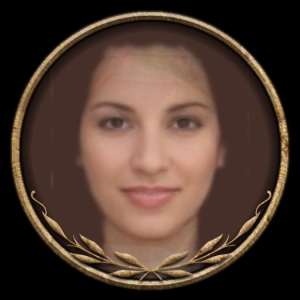
Albeit of modern Greek women, this is a composite of a great number of their faces. She would be comparable to the anticipated Hero.

The word or, more precisely, the name Hero (Hērṓ) was considered feminine. The best-known example would be from the tragic story of Hero and Leander (Léandros). They lived on opposite sides of The Dardanelles strait and Hero would set a lamp in a tower window each night, essentially as a lighthouse for Leander‘s swim. This lasted for months until the light was extinguished in a storm and Leander drowned. Hero threw herself from the tower to her own death.

There is, of course, a male Hero – one of the sons of King Priam (Príamos) of Troy. This Hero is not distinguished in any detail by his own myth. Giving him the benefit of the doubt and considering Hero to be a unisex name, the Ancient Greek would still expect a veritable battalion of female faces with the above premise.

Words and their definitions evolve over time and across borders. When we borrow words from foreign languages we don’t always get all the nuance in the bargain. We should, however, try to be diligent in the use of our vocabulary. We set the meaning and context by our selections. This has ramifications outside of conversation and writing, too. Words are how we think.

Last week, I wrote a summary of the monomyth. Regular readers of this blog will know that I’ve been devoting much of my thought to what makes a hero. The shortest answer is, “We do.” And, I think, we should be careful in our choices. In the current social climate we’re much more likely to hear the word hero applied to celebrities from the worlds of music or sports. If you ask several people what makes a hero, courage will rapidly rise near to the top of the list. It is true that the musician and the athlete must be brave to be successful; I’m not sure that’s any less true of all other profession requiring dedication.

When I was a child all of my heroes were fictional characters or persons who’d been dead long enough to have legends associated with them. In youth I think this is acceptable and natural. Early in my adulthood my emphasis and definition changed and I invented a puzzle for myself (and eventually others).

 Name four real people, none of whom are related to you, that contributed to your identity – and be specific about how.

I didn’t know it at the time but, I believe now, this provides a wonderful definition of what a personal hero may be. A hero should be someone – male or female – who inspires us to be more. In the original puzzle I suggested that the four figures would represent a personal Mt. Rushmore. This was a handy way to refer to this mental exercise but it was an error. The answer to this puzzle should not be immutably etched in stone. Identity, exactly like definition, evolves.

My answer to my own puzzle was:

  • Gene Roddenberry, for introducing the value of ideals
  • Richard Scarry, for illustrating the necessity to look beyond and behind face value
  • Carl Sagan, for demonstrating the interconnected nature of all subjects and disciplines
  • Jim Henson, for the gift of purposeful whimsy

You might notice all of them are men. In my young adulthood I was interested in defining what sort of man I would be. As a writer, however, I am dedicated to presenting heroes of all genders and having each character be – as much as is possible in fiction – real people.

So, I’m adding two women to the Mt. Rushmore:

  • Nancy Grace Augusta Wake ᴀᴄ, ɢᴍ – a British SOE agent and ally of the French Resistance during World War II. Known aliases: Heléne, Andrée, the White Mouse, and Witch.
  • Hannah Callowhill Penn – the acting governor and proprietor of the Province of Pennsylvania at least a generation before the era of the Founding Fathers. She was the second wife of William Penn.

On the clock…

The most frequent description of the character arc for a protagonist is called the Monomyth or The Hero’s Journey. This isn’t really an outline for the story. It presents an invitation to a date with destiny and is a road map for the main character. The story is about the destiny itself.

In an article I read recently, the claim was made that all the decision-makers in Hollywood are aware of this formula. That’s probably true but impossible to confirm. The article in question went on to imply that adherence to the monomyth is expected. If so, the audience is reacquainted with the Hero’s Journey with each and every story – even if they’re unaware of the structure. Does this mean members of the audience are indoctrinated to expect the monomyth? Are they evaluating stories based on this – even unconsciously? Is there value in exploring alternatives to this structure (made famous by Joseph Campbell and Christopher Vogler)?

Clock

Imagine the Hero’s Journey as a clock. Let’s say our Hero starts at Noon and ends at Midnight. It’s going to be a long day. She or he begins and ends at a metaphoric home. The first hour of the story shows us the world the Hero lives in, what daily life is like, and what responsibilities he or she has.

1

By 2:00ᴘᴍ, however, comes the introduction of a crucial shift in those responsibilities. The Hero spends the following hour presenting reasons that this change (and the new work it represents) can be done by someone else or avoided entirely. All the while, particularly between 2:00ᴘᴍ and 3:00ᴘᴍ, the Hero learns more about the situation and perhaps just why things were not ideal earlier that morning. All of the lessons during this hour are meant to illustrate not only that the Hero has a date with destiny – said date is an undeniable obligation.

2

People fear change. Our Hero is no exception. Until about 4:00ᴘᴍ, the Hero has been experiencing the stages of grief, in a sense. The day has provided shocking news. The Hero has attempted to deny the news and to bargain a way out of dealing with it. As the duty to respond grows inevitable, our Hero finally gives it serious thought and begins, at least mentally, to prepare to deal with it.

3

Perhaps for the sake of emphasis or as an actual intervention, someone arrives to kick the Hero into the real world. It is 4:00ᴘᴍ. This is the mentor, who may have arrived with a useful tool to present as a gift. From 5:00ᴘᴍ to 8:00ᴘᴍ, everything the Hero experiences is new. This is a total immersion and each skill the Hero learns is applied immediately of necessity. There are failures during this stage, of course. The Hero may even experience doubt and seek to quit.

4

At about dinnertime, some stories introduce a specific woman. She may seek to lead the Hero off the new road. Alternatively she may serve as a second mentor. This means the presentation by point or counter-point of the same theme. Depending on the manner of the character, the same line of dialog can be encouragement to quit or to continue. Note: If such a character is included here the author should be careful not to present this woman as a stereotype and cypher. If this sort of message must be delivered to the Hero and the audience, the messenger doesn’t have to be a woman. There’s a risk – as the monomyth is traditionally presented – of an approach to misogyny here.

5

By 7:00ᴘᴍ the Hero finally knows what’s really going on and what must be done. The date with destiny is set at 8:00ᴘᴍ and the Hero’s determination is now a true commitment. Of course the Hero wins. That is, very probably, why she or he is the Hero of the story. At 9:00ᴘᴍ, there’s a reward for all the trouble and injury along the way.

6

But it isn’t Midnight yet. The defeat of the villain is only partial and the payment for service may be intended as a another distraction. The Hero is unaware of this and it’s been a hard day at work – including overtime. There’s been an unexpected bonus. Ten o’clock. Time to go home. The way home is filled with obstacles. There may even be a race. The victory back at 8:00ᴘᴍ left loose ends. The road home proves the lessons have been learned and the skills are now an intrinsic part of the Hero. The transformation is genuine.

big ben

This final triumph comes at the Eleventh Hour and there’s an epiphany following. The Hero’s reward is reinforced by this event and the last steps home complete the transformation. As the clock strikes Twelve, the check is cashed, and it can finally – actually be time to celebrate.

8

All this to say, the author is not bound to this structure any more than the hero should be considered a slave to the story. If there is no choice, there is no story. If it is true that all good stories following the monomyth it is important to remember that all bad stories do as well. What matters more than compliance, then, is how the tale told departs from the formula. Going off the clock is part of what makes the story worth telling and memorable.


🕛

Well, why not write?

There are four stories pushing at me (not counting those planned with my coauthor). In pondering each over the past week or so, I was a little surprised to realize that each stems from a different purpose in telling.

For longer than I can precisely recall, I have criticized a lot of films with the label “big, dumb, testosteronedriven explosion movie”. I’ve never been particularly interested in writing a romp. That’s not the objective or, I should say, there is an objective.

Each of the stories I have in progress came from quite different moments of inspiration. Some were like unexpected bolts of lightning while others were the result of prolonged brainstorms.

Comprehension of a lifetime’s factors —

One of the novels began as a spreadsheet for sorting data and looking for trends. It wasn’t intended to be a story at all. Trends in the information, however, began to suggest a narrative. The more I looked, the more compelling and fascinating (to me) it became. There actually was a narrative in the chart and it sprang out of it in an almost parthenogenetic way.

Expanding the perception of courage —

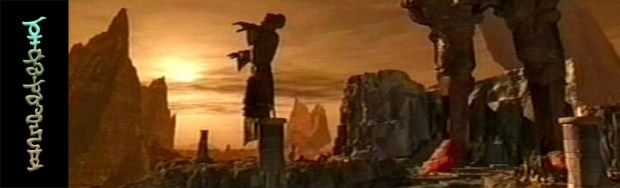
The second book was inspired by a single image. I cannot say if the artist had any story in mind but it made me think of a “band of brothers” situation. The main characters in said band all happen to be young women. For a brief moment it seemed that Sucker Punch might be what I had in mind but the reviews given by friends dissuaded me from that notion and from seeing the film.

The diligence of the heart —

Folklore has many tales that predict the return of a hero or of a force. Imagine such a situation were to transform a part of the world – and everyone in it – almost in an instant. What aspect of human nature and emotion could then be examined? What would prove you were still human despite the change and how far would you go to prove it?

Making sense of nonsense —

Science fiction series, when they include sentient aliens, eventually generate a set of stereotypes concerning them. Even Star Trek and Doctor Who have not proven immune. Examining the Vulcans logically reveals that much of what we think we know about them doesn’t make a damn bit of sense. I aim to explain the contradictions.

For just a little over a year, I have been posting here on a weekly basis. Somewhat prior to adopting that habit this blog kicked off with a simple image. If my reason for writing can be distilled to a single sentence, it is captured in that banner.

Homesteading